
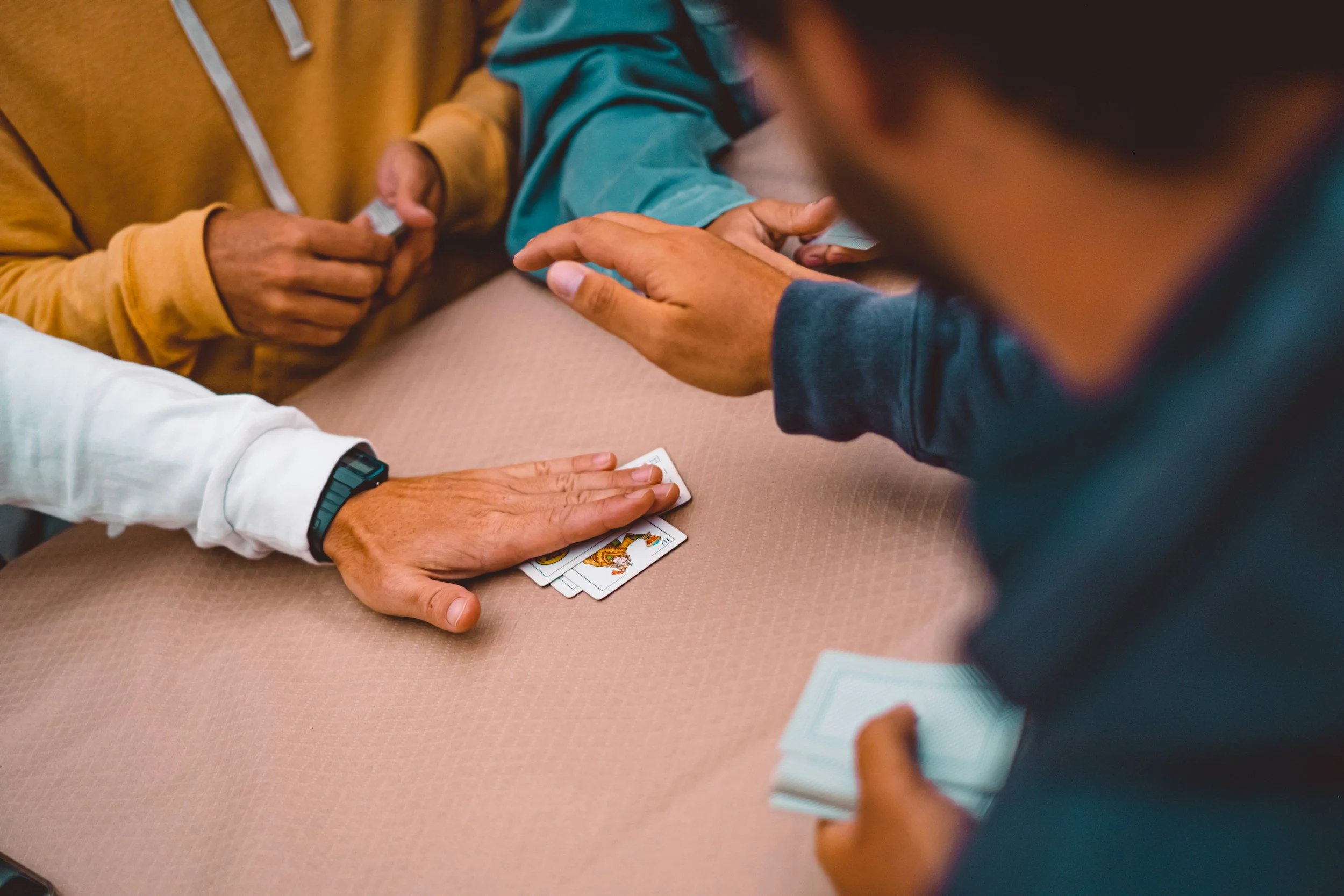
How to play Russia's most popular card game
There's a winner in every card game. Durak is the one where there's also a loser, and everyone at the table knows exactly who it is.
It's Russia's most popular card game, popular across the post-Soviet states, and it has since spread well beyond them. The name means "fool." The objective is to shed every card before the deck runs out. The last player still holding cards at the end is the durak.
When I was choosing games for The Pocket Playbook, plenty got cut; games that needed a second deck (Nertz is a big hit with my family) or scorekeeping. Every game had to fit on one or two small pages and need nothing but the deck. Durak needed adapting to fit those constraints. This is the full version.
What you need
Six through Ace in all four suits. Remove the 2s through 5s from a standard deck. For more than six players, use the full 52 cards. Same rules; the deck just runs longer.
Setup. Deal six cards to each player, one at a time, face down. Set the rest of the pack face down in the middle — this is the draw deck, or talon. Take the bottom card of the draw deck, turn it face up, and lay it crosswise underneath the pile so it stays visible. Its suit is trump for the entire game. That visible card is not out of play; it is the last card drawn.
Who attacks first. The player holding the lowest trump attacks first. If nobody has a trump, the player with the lowest card of any suit attacks. If two players hold equally low cards, the one closest to the dealer's left goes first.
Play
Play moves clockwise, in bouts. One player attacks, the player on their left defends.
The attacker plays one card face up in front of the defender — the initial attack card. The defender must beat it or take it.
Beating a card. You beat it with a higher card of the same suit, or any trump if the attacking card isn't trump. If the attacking card is trump, you need a higher trump. Aces are high in each suit, so a six of trumps beats an ace of any other suit.
Adding cards. Once the first card is down, the attacker may add more, but only cards matching a rank already on the table. If the attack began with a seven, only sevens may be added. If the defender has beaten the seven with a nine, sevens and nines may now be added.
Three limits: the attacker cannot play more cards than the defender holds in hand, cannot play more than six cards in a single bout, and cannot add anything once the defense is resolved.
Defending. The defender covers cards one by one, in whatever order they like, but every card must be covered before the bout is over. At any point they may say "take" and the bout ends immediately; nothing further can be added.
Ending a bout
If the defender covers everything, the bout ends in their favor. All cards on the table are turned face down and pushed aside into the discard pile. The defender becomes the attacker for the next bout, attacking the player on their left.
If the defender takes the cards, they pick up every card on the table and add them to their hand. The next player clockwise after the defender becomes the attacker. The player who just attacked does not attack again.
Refilling. After every bout, players draw back up to six from the deck. The attacker draws first, any other attackers next in throw-in order, and the defender last. One at a time, up to six. If the deck runs short, whoever is earlier in the order gets cards and the rest go without. When the face-up trump card is finally drawn, the deck is exhausted. From that point nobody draws again and the game enters its endgame.
On taking cards
Taking is not a penalty to be avoided at all costs. Often it's the better play.
Two reasons. First, defending costs you a card you'd rather keep and taking costs you nothing but hand size. Second, the cards you pick up are low cards you'd otherwise never get to play; in your hand they become ammunition, because you can throw in pairs and triples of ranks you hold and drag a bout out longer than the defender wants.
The real cost is hand size, and it's a genuine trade. But a defender who takes a pile of sixes and sevens while holding strong trumps has usually done well.
What you cannot do is take some of the cards. It's all of them or none.
The endgame
Once the deck is empty, hands can only shrink.
A player who runs out of cards wins and is out of the game. A player who runs out mid-bout is out immediately. Play continues among the remaining players until one still holds cards. That player is the durak.
If the last two players go out at the same moment the game is a draw. Nobody is the fool.
Two-player Durak
The sharpest version of the game. With no third player to pass the attack to, every decision about whether to take or defend is a direct exchange, and the trump count is the whole game.
One rule catches people out: if the attack comes all the way back to the original attacker, they must defend it like anyone else.
Common house rules
First bout capped at five cards instead of six.
Unlimited throw-ins — the attacker may add as many cards as the defender holds, with no six-card ceiling.
Attacker may decline — the first attacker of the game can pass the attack on before playing a card.
Trump chosen, not turned — some groups name trumps rather than exposing a card.
No draw limit on throw-ins by other players.
Tips
Count trumps. There are nine in a 36-card deck. Know how many are out and how many remain by watching what's been played and taken.
Take deliberately. A fistful of sixes and sevens early is often better than burning a trump to defend: you'd rather hold those cards than leave them in the deck for someone else.
Attack with ranks, not singles. One card at a time wastes the throw-in rule. Going in with a rank you hold two or three of means the defender must cover all of them or take the lot.
In the endgame, attack from strength. With the deck empty, attacking low sheds cards; attacking high forces a take. Which you want depends entirely on whether you're holding trumps.
Durak is one of twenty games in The Pocket Playbook, included with every Ravalli Pocket Card Kit: a stamped steel tin, a deck, and a playbook, built for filling the small moments that are often overlooked.